
Rapid strides in digital payments notwithstanding, the Indian economy will likely remain cash-dependent for many years to come, at least that's what the automated teller machine makers and cash logistics companies are betting on. After growing at over 20 per cent for most of 2020, currency in circulation growth fell to 8.5 per cent as of October 29 this year, shows data from the Reserve Bank of India (RBI). The reason for the steep rise in currency last year was the uncertainties related to the Coronavirus (Covid-19) pandemic, where people preferred to hoard cash to meet exigencies.

India should not be left behind. It should join the seven central banks which are studying feasibility and safeguards necessary to eliminate risks, particularly from hacking, advises former foreign secretary Shyam Saran.

The Reserve Bank will launch the first pilot for retail digital rupee in Mumbai, New Delhi, Bengaluru and Bhubaneswar on December 1, and later expand it to nine more cities in the initial phase. This follows a month after the RBI had started a pilot in the digital rupee - wholesale segment on November 1. The Reserve Bank announces the launch of the first pilot for retail digital rupee (e?-R) on December 1, 2022, the central bank said in a statement on Tuesday.

The net direct tax collection so far this fiscal rose 19.41 per cent to Rs 14.70 lakh crore, reaching about 81 per cent of the full-year target, the income tax department said on Thursday. "The provisional figures of Direct Tax collections up to January 10, 2024, continue to register steady growth," the Central Board of Direct Taxes (CBDT) said in a statement. Direct Tax collection, net of refunds, stood at Rs 14.70 lakh crore which is 19.41 per cent higher than the net collection for the corresponding period of last year.

The currency in circulation (CIC) declined by Rs 7,600 crore in the Diwali week, making it the first such happening in two decades, a report said on Thursday. This was made possible courtesy of a greater reliance on digital payments by people, the report by economists at SBI said, adding that the Indian economy is undergoing a structural transformation at present. They clarified that the Diwali week in 2009 had also witnessed a marginal Rs 950 crore decline in currency in circulation, but that was purely due to the economic slowdown amid the global financial crisis.
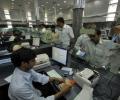
Nearly two million e-mandates for recurring payments have been registered with banks and card networks after the Reserve Bank of India (RBI) made it mandatory from October 1 to take prior consent of a customer before debiting her account, sources in know of the matter said. Industry estimates peg the recurring transactions at approximately 2.5 per cent of the total volume of transactions, and about 1.5 per cent in terms of value. Of these, around 75 per cent of domestic recurring transactions, and about 85 per cent international recurring payments are below Rs 5,000.

In the first such collaboration for India, the country's flagship payments platform, the Unified Payments Interface (UPI), and Singapore's PayNow payment system have launched a real-time cross-border payment linkage system. The linkage, which was launched by Prime Minister (PM) Narendra Modi and Singapore's PM Lee Hsien Loong on Tuesday, was kicked off by a live cross-border transaction between Reserve Bank of India Governor Shaktikanta Das and Monetary Authority of Singapore managing director Ravi Menon, using mobile phones.

Debt mutual fund (MF) schemes are set to register the best calendar year (CY) performance in the last four years despite no changes in the interest rate. An analysis of one-year performance of debt funds show that many of the schemes are set to deliver double-digit returns in CY 2024.

The prime minister said gradually people are "shedding their hard currency mindset" and moving towards digital currency and the youth are leading the way using their mobile phones as the new tool to make and receive payments.

Surge in UPI transactions is because of an increased consumer interest in making bill payments and recharging mobile phones online, and purchase of non-essential goods on e-commerce platforms.
The country's largest private lender HDFC Bank is planning to facilitate a shift in its payments module from the existing core banking platform. This would ensure minimal payments downtime, even if core banking is not available. "This 15-month project will be followed by hollowing the customer-master modules from its existing core systems. "It will ensure a single system of record for customers across various products," said Sashidhar Jagdishan, managing director (MD) & chief executive officer (CEO), in the annual report for 2021-22.

While digitisation and automation have made internal processes more efficient, front-end products are being enhanced digitally through robotics, artificial intelligence and botchats.

Do we have enough trained oncologists and medical professionals in India to man these over 4,500 beds in the public sector?

Private sector banks reported the maximum number of frauds in 2022-2023.

Almost all banks that issue contactless cards provide users with a 100 per cent liability cover.

Flipkart-backed super.money is on an expansion spree and plans to expand its range of offerings in credit and wealth management after launching its operations in July this year. The Bengaluru-based fintech company is on track to roll out credit products such as credit on Unified Payments Interface (UPI), unsecured credit cards, and personal loans within the first half of the next calendar year (2025).

The next meeting of the GST Council will be held on September 28-29 in Goa.

In a recent clarification, the Central Board of Indirect Taxes and Customs (CBIC) provided insights into the goods and services tax (GST) treatment of transactions involving vouchers. According to the CBIC, vouchers can be categorised into two types.

India's total online shopper base at 30 per cent of its internet population is low when compared with 78 per cent in China and 70-plus per cent in the US.

The government needs to make the right policies and further execute them properly if it wants to move towards this goal

The minister also exempted components from taxes to encourage domestic manufacturing of these devices.

Aided by robust demand, automobile retail sales in India rose by 11 per cent last year as compared to 2022, dealers' body FADA said on Monday. The overall domestic automobile retail sales stood at 2,38,67,990 units in the 2023 calendar year as compared to 2,14,92,324 units in 2022. Passenger vehicle sales stood at 38,60,268 units last year, up 11 per cent from 34,89,953 units in 2022.

The cheque truncation system, which is currently operational at the major clearing houses of the country, has stabilised well and it has made large efficiency gains: RBI

Watal panel had suggested an independent payments regulator be set up.

The small finance bank model may still be testing the water some 10 years since its launch. According to banking experts, the regulator has taken a cautious approach in granting approvals. Unity Small Finance Bank was the last one to get a licence in the category in November 2021.

Foreign direct investment (FDI) inflows into India have crossed the $1 trillion milestone in the April 2000-September 2024 period, firmly establishing the country's reputation as a safe and key investment destination globally. According to data from the Department for Promotion of Industry and Internal Trade (DPIIT), the cumulative amount of FDI, including equity, reinvested earnings and other capital, stood at $1,033.40 billion during the said period.

Eying benefits from digital banking, lenders are now looking at building Unified Recovery Interface (URI) for enhancing efficiency, reducing costs, and getting good prices for properties of defaulters. This would be managed by PSB Alliance Ltd, a company set up by all public sector banks in the country. M V Rao, chairman, Indian Banks' Association (IBA), said: "Till now we had Unified Payments Interface (UPI), a product developed by National Payments Corporation Ltd (NPCI).

Uncertainties on account of COVID-19 pandemic have increased the demand for currency notes not only in India but across the globe, official sources said, dismissing the criticism that demonetisation has failed to reduce cash in the economy. Government sources said that growth of the digital payments system post-demonetisation will ultimately curb the dependence on cash. Official data points out a jump in digital payments through different modes, including plastic cards, net banking and Unified Payments Interface (UPI).

The number of internet users in rural India increased 18 percent last year, faster than growth in urban areas and continuing a trend that started two years ago. Internet users in urban India increased 5 percent in 2021. Rural India has 351 million users, or 37 percent of people there, according to a report by the Internet and Mobile Association of India (IAMAI) and data analytics company KANTAR.

The pilot project for central bank digital currency (CBDC) in the retail segment went live on Thursday with the Reserve Bank of India (RBI) issuing Rs 1.71 crore to four participating banks based on their indents. The central bank has identified four banks for the first phase of the pilot - State Bank of India, ICICI Bank, Yes Bank and IDFC First Bank - in four cities, Mumbai, New Delhi, Bengaluru and Bhubaneswar. The highest indent was received from one private sector bank.
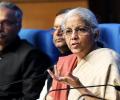
The eighth Budget of Finance Minister Nirmala Sitharaman continued to focus on 'GYAN' (Garib, Youth, Annadata, Nari) to maintain a consistent and coherent strategy initiated over the years in pursuing the government's vision for Viksit Bharat. The approach, characterised by incremental yet impactful steps, aims to create a compounding effect over time.

The message is clear: The 60-year-old wise uncles need to handhold the 40-year-old entrepreneurs when, obsessed with ambition and greed for growth, they become a victim of hubris, points out Tamal Bandyopadhyay.
The RBI on Friday asked Paytm Payments Bank to stop opening new accounts amid "material supervisory concerns" observed in the bank. "Reserve Bank of India has today, in exercise of its powers, inter alia, under section 35A of the Banking Regulation Act, 1949, directed Paytm Payments Bank Ltd to stop, with immediate effect, onboarding of new customers," the central bank said in a statement. The bank has also been directed to appoint an IT audit firm to conduct a comprehensive system audit of its IT system.

Mutual funds aspirants have the option of snapping up smaller AMCs or applying for a new licence.
With the banking regulator lifting restrictions on HDFC Bank's digital initiatives, the largest private sector lender is now girding up to launch a clutch of customer-facing applications (apps), which will act as stepping stones in its journey to morph into a technology (tech)-led bank from a conventional one. Following repeated outages in its digital offerings, the Reserve Bank of India (RBI) had barred HDFC Bank from issuing new credit cards in December 2020 and prevented it from going ahead with its digital launches. The embargo on issuing credit cards was lifted in August 2021 and the ban on digital launches was lifted last week.

'Similar to the case of the digital payment system where the government created a public platform and others joined in, we are exploring a similar structure to create a PPP platform where the compute required for AI could be accessed by the small player.'
The Reserve Bank on Tuesday directed digital lending entities to disclose upfront the names of of their empanelled agents authorised to contact borrowers in case of default of loan, and also intimate the details to customers before initiating the recovery process. In August last year, the RBI had tightened norms for digital lending to prevent charging of exorbitant interest rates by certain entities and also check unethical loan recovery practices. Under the new norms, all loan disbursals and repayments are required to be executed only between the bank accounts of borrower and the regulated entities (like banks and NBFCs) without any pass-through/ pool account of the Lending Service Providers (LSPs).

Wedding planner WedMeGood estimates that the average wedding budget has surged to Rs 36.5 lakh this year, with destination weddings averaging Rs 51 lakh.

Shares of One97 Communications (OCL), which provides financial services under the brand 'Paytm', and has a banking arm Paytm Payments Bank (PPBL), hit the 5 per cent upper circuit at Rs 428.10 on the National Stock Exchange (NSE) in Monday's (February 26) intraday trade. The up move in the stock on Monday came after the Reserve Bank of India (RBI) asked the National Payments Corporation of India (NPCI), in post stock market hours, to look into the possibility of migrating PPBL customers, using the UPI handle '@paytm', to four-to-five other banks.

The move triggered sharp reaction from the opposition, which has accused the state's BJP government of trying to stifle freedom of expression.
 © 2026 Rediff.com - Investor Information - Advertise with us - Disclaimer - Privacy Policy - Sitemap - Feedback - About us - Terms of use - Grievances